If you’re based in Dunedin or anywhere across the Otago region, you already know that winters here are no joke. Temperatures regularly dip well below what the rest of New Zealand experiences, and that means your heat pump is working overtime. The good news is that with a few smart habits and the right settings, you can stay warm all season without watching your power bill spiral upward.
We install and service heat pumps across Dunedin, Mosgiel, and the wider Otago district. Over the years we’ve seen the same avoidable mistakes cost homeowners a surprising amount on their monthly bills. This guide pulls together the most effective strategies for getting maximum performance from your heat pump this winter.
Set Your Temperature and Leave It There
One of the most common mistakes homeowners make in winter is cranking the heat pump to its highest setting when they first walk in from the cold. It feels logical, but it actually works against you. Heat pumps are inverter-driven, meaning they operate most efficiently when maintaining a steady temperature rather than racing to recover from a dramatic drop.
Consumer NZ recommends setting your thermostat to between 18 and 21 degrees Celsius and leaving it there throughout the evening. Setting it higher does not heat your home faster. It simply forces the unit to work harder and consume more electricity to reach an unnecessarily high target temperature before cycling back down. Pick a comfortable temperature, set it, and let the system do its job steadily.
Use Timers to Pre-Heat Before You Need It
Dunedin mornings are cold. Rather than waking up to an icy house and blasting the heat pump from a standing start, use its timer function to begin heating an hour before you get out of bed. This allows the system to warm your home gradually and efficiently while running in lower-demand conditions.
The same principle applies in the evening. Set the timer to switch on before you arrive home from work, so you return to warmth rather than triggering a sudden heavy load on the unit. Many modern heat pumps can be controlled remotely via smartphone apps, which gives you even more flexibility to adjust timing when your schedule changes.
Keep Filters Clean for Peak Efficiency
A clogged filter is one of the single biggest causes of reduced heat pump performance and higher running costs. When filters are blocked with dust, the unit has to work harder to push air through, which increases energy consumption and puts unnecessary strain on components.
During winter months when your heat pump is running daily, clean the filters every two to three weeks. This takes only a few minutes and can make a noticeable difference to both performance and your power bill. Simply remove the filter panel, rinse the filters under warm water, allow them to dry fully, and reinstall. If you are unsure how to access your unit’s filters, the team at A1 Electrical is happy to walk you through it.
Check Your Outdoor Unit Regularly
The outdoor unit of your heat pump is exposed to Otago’s often harsh winter conditions. Frost, fallen leaves, and debris can restrict airflow around the unit, reducing its ability to extract heat from the outside air efficiently. Give the outdoor unit a quick visual check every week or two and clear away any blockages.
In particularly cold snaps, the outdoor unit may develop a light frost on the coils. This is normal and most modern units have an automatic defrost cycle to deal with it. However, if you notice heavy ice build-up that does not clear on its own, contact a licensed electrician for a service check. Ignoring this can lead to more serious damage.
Seal Draughts and Close Curtains at Night
Your heat pump can only do so much if your home is losing warm air through gaps around windows, doors, and skirting boards. Draught-proofing is one of the most cost-effective steps you can take alongside operating your heat pump efficiently. Seal visible gaps with weather stripping or draught excluders, particularly around older window frames and exterior doors.
Closing curtains and blinds as soon as it gets dark is another simple measure that makes a real difference in Dunedin homes. Glass is a poor insulator, especially single-glazed windows which are still common in Otago’s older housing stock. Heavy curtains trap heat inside and significantly reduce how hard your heat pump needs to work overnight.
Use the Right Mode and Fan Setting
In winter, always ensure your heat pump remote is set to HEAT mode rather than AUTO. Auto mode can sometimes switch the unit to cooling if the system reads conditions ambiguously. Set both the fan speed and louvre direction to AUTO as well, which allows the unit to determine the most efficient way to distribute air throughout the room.
Direct the louvres downward during heating, as warm air rises naturally and distributing it lower in the room first allows it to circulate more effectively through the space.
When Was Your Heat Pump Last Serviced?
If you cannot remember the last time a qualified electrician checked your heat pump, winter is exactly the right time to book a service. A professional check covers refrigerant levels, electrical connections, coil condition, and overall system performance. A well-maintained unit runs more efficiently, lasts longer, and is far less likely to break down on the coldest night of the year.
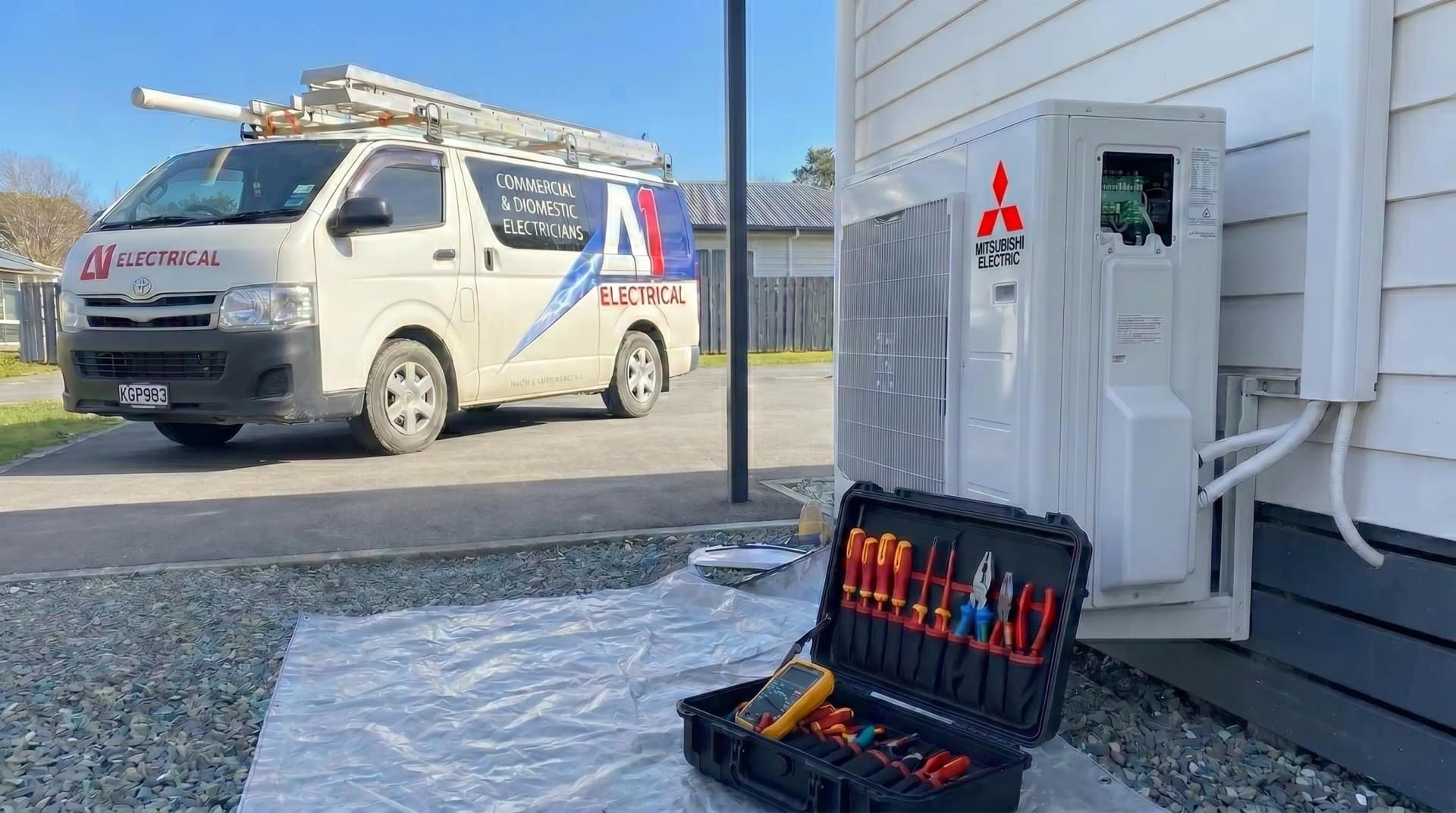
A1 Electrical’s Master Electricians service heat pumps across Dunedin and the Otago region. We are accredited installers for both Fujitsu and Mitsubishi systems and carry the expertise to keep your unit performing at its best all winter long. If you are still choosing a system, our guide on how to choose the right heat pump for your home covers sizing, types, and brands.