Most business owners think about electrical safety when something goes wrong. A tripped breaker, a burning smell near the switchboard, a light that keeps flickering. By that point, you are already in reactive mode, and reactive mode is expensive.
The good news is that an electrical safety maintenance plan does not need to be complicated. With the right structure in place, you can stay ahead of problems, meet your obligations under New Zealand law, and give your team a safe environment to work in every single day.
Here is what that plan needs to cover, and how to get started.
First, the Legal Side of Things
Under the Health and Safety at Work Act 2015, you have a duty to manage risks in your workplace. Electrical systems are one of the most significant sources of risk in any commercial premises, and that obligation sits squarely with you as the business owner or property manager.
That does not mean you need to become an electrician. It means you need a documented plan, regular inspections carried out by a registered professional, and records that prove you are taking it seriously. If something ever goes wrong and WorkSafe NZ comes knocking, having that documentation in place makes an enormous difference.
What Actually Goes Into an Electrical Safety Maintenance Plan?
Think of it as a living document that answers one core question: how do we know our electrical systems are safe right now? Here are the six things it needs to cover.
1. Know What You Have Got - Your Electrical Asset Register
You cannot maintain what you have not documented. Start by listing every fixed electrical asset on your premises: your switchboard, lighting circuits, power outlets, heating and ventilation systems, data infrastructure, and any specialist equipment tied to your specific type of business.
For each item, record its location, approximate age, and when it was last inspected or serviced. It does not need to be fancy. A simple spreadsheet works fine. What matters is that it exists and gets updated.
2. Regular Inspections by a Registered Electrician
This is the non-negotiable part. All electrical work and inspection in New Zealand must be carried out by a licensed electrical worker. For most commercial premises, a full electrical inspection every one to three years is a reasonable baseline, but that frequency depends on how hard your systems are working.
A commercial kitchen running 12 hours a day puts very different demands on its wiring than a small office. A medical facility has specific compliance requirements that a retail shop does not. A good electrician will help you set an inspection schedule that makes sense for your actual operation, not just a generic recommendation.
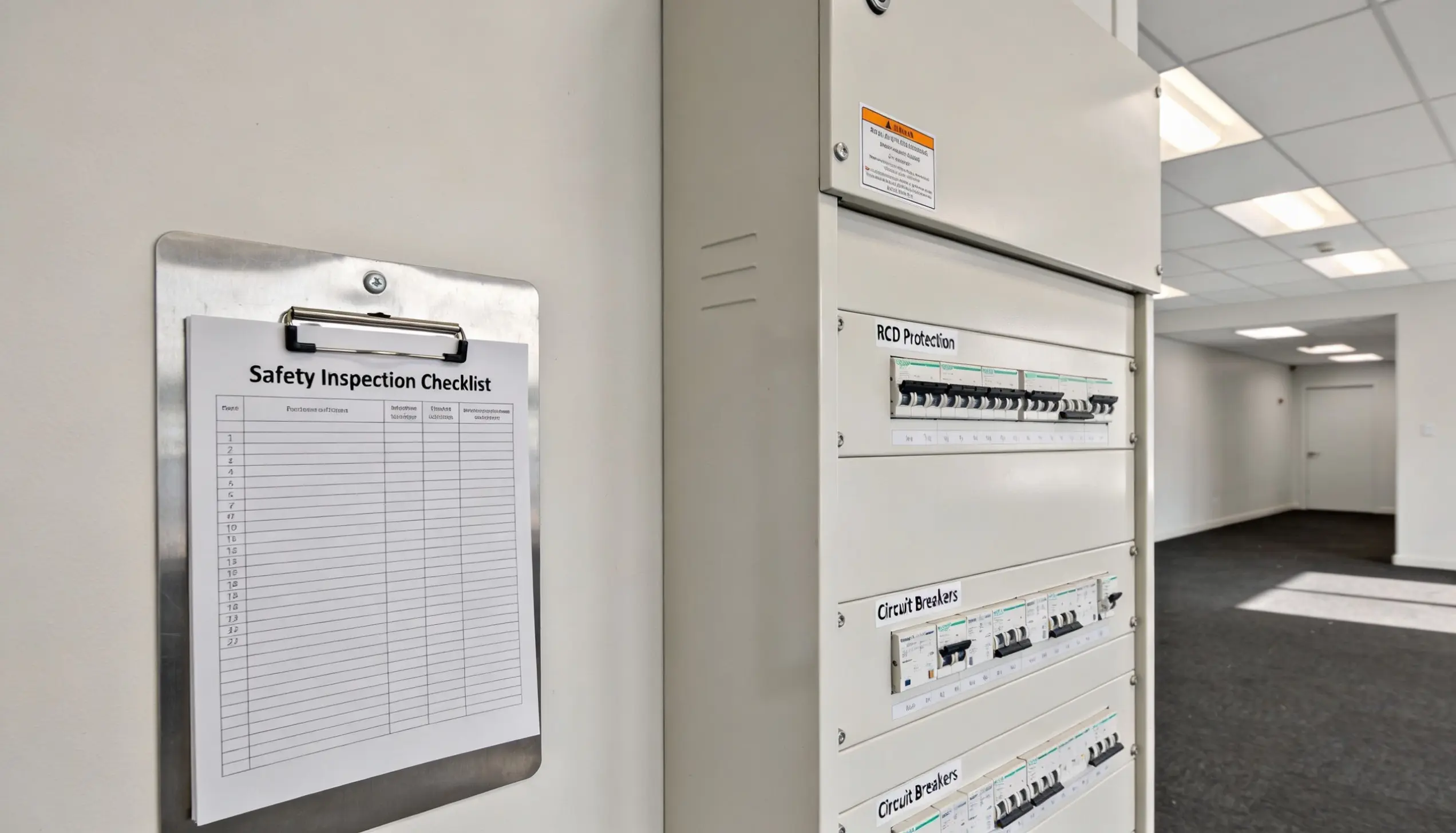
3. Keep an Eye on Your Switchboard
Your switchboard is the one piece of infrastructure that affects everything else. If it is ageing, undersized, or showing signs of wear, the whole system is at risk. Older switchboards with ceramic fuses rather than modern circuit breakers are particularly worth flagging for a professional assessment.
Modern switchboards include residual current devices (RCDs) that cut power in milliseconds if a fault is detected. It is a simple upgrade that can prevent serious harm. If yours was installed more than 20 years ago, it is worth having a conversation with your electrician about whether it is still fit for purpose.
4. Test and Tag Your Portable Equipment
Portable electrical equipment - anything that plugs in and moves around - needs to be tested and tagged at regular intervals. The frequency varies by industry and equipment type, so check the current WorkSafe NZ guidelines for your sector.
Keep a record of every item tested, the result, and the date. Visible, current tags on your equipment tell your team and any visiting inspector that you have this under control.
5. Give Your Team a Simple Way to Report Problems
Your staff will often notice an issue before anyone else does. A sparking outlet. A breaker that keeps tripping on the same circuit. A warm patch on the wall near an electrical fitting. These are not things to ignore or deal with later.
Make it easy for your team to flag concerns, and make sure they know two things: first, that you want to hear about any issue, however small it seems; and second, that they should never attempt a fix themselves. All remedial electrical work must be done by a registered electrician. Full stop.
6. Have an Emergency Plan Ready
Emergencies are rare, but the cost of not being prepared is high. Your plan should include clear, simple steps for isolating power at the switchboard, a contact number for a registered electrician, and basic guidance for staff on what to do if they suspect an electrical fire or shock incident.
Post it somewhere visible. Review it once a year. Make sure every new staff member knows it exists.
Keep Your Records Every Time
Whenever a registered electrician completes fixed wiring work on your premises, they are required by law to issue a Certificate of Compliance. Keep every one of these on file. They are your evidence that work was completed correctly and to the required AS/NZS 3000:2018 standard.
Beyond the COCs, maintain a simple log of inspections, faults identified, work completed, and who did it. This paperwork takes minutes to update and can be invaluable if you ever face an insurance claim or a compliance audit.
Not Sure Where Your Business Stands?
Since 2006, we have worked with schools, medical centres, restaurants, and residential developers across Dunedin and Otago. We know what a compliant electrical system looks like, and we know how to get yours there.
Our inspection service gives you a thorough assessment of your systems, a clear written report, and practical recommendations. No jargon, just the information you need.
Every job comes with a fixed-price quote, a Certificate of Compliance on completion, and the backing of EWRB-registered Master Electricians with Gold SiteWise Certification for two years running. Finance is available through MTF Finance for larger projects.