Your toaster, laptop charger, or that trusty drill in the shed – they all have something in common. Over time, they can develop hidden electrical faults that put you and your family at risk. That’s where test and tag comes in.
As Master Electricians, we’ve seen our fair share of worn cables, damaged plugs, and appliances that looked perfectly fine on the outside but were accidents waiting to happen. Test and tag isn’t just a compliance tick-box – it’s a genuinely important safety measure that could save lives.
What Is Test and Tag?
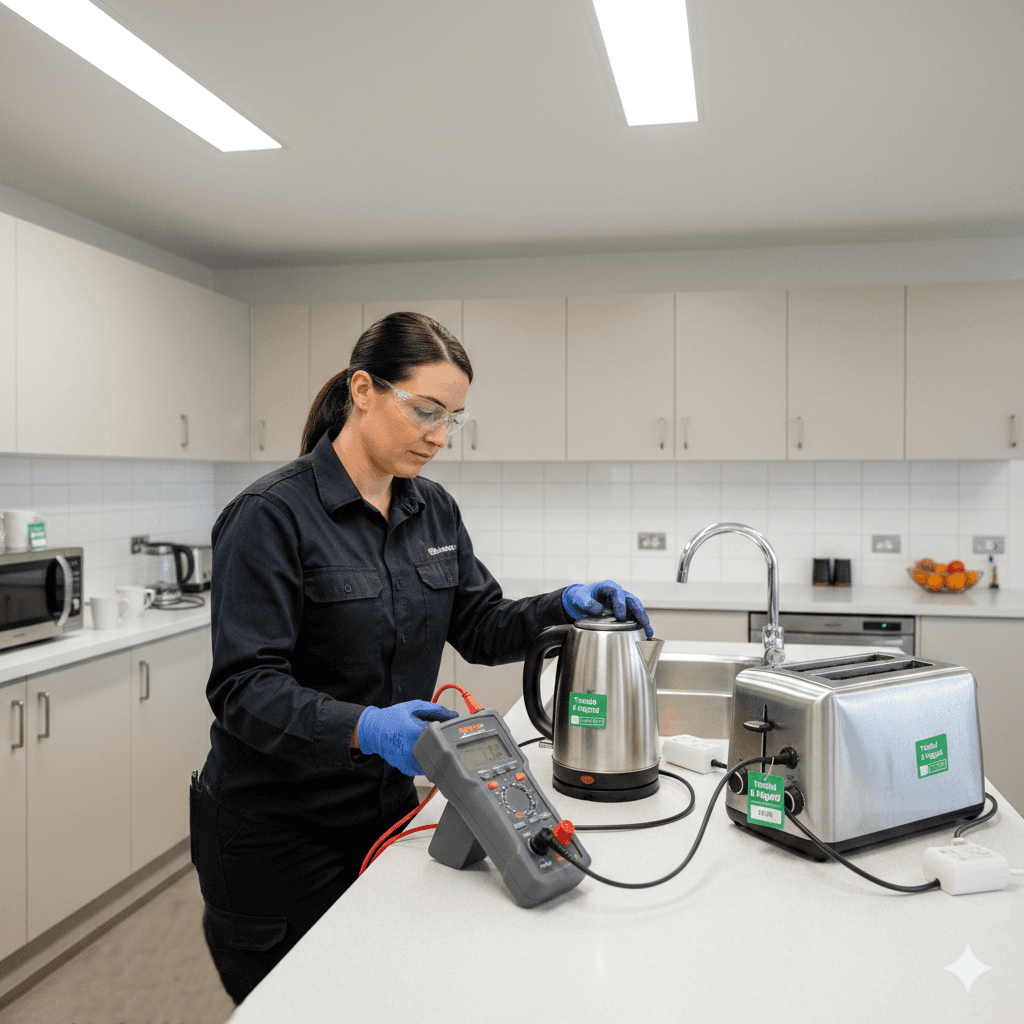
Test and tag is a two-step safety inspection for portable electrical appliances. First, your electrician visually inspects the appliance for obvious damage – frayed cords, cracked plugs, missing earth pins, or signs of overheating. Then comes electrical testing using specialised equipment that checks things you can’t see, like earth continuity and insulation resistance.
Once an appliance passes, it gets a tag showing the test date and when the next test is due. Failed items get taken out of service immediately.
Who Needs It?
- Businesses and workplaces have clear obligations under health and safety legislation. If you employ staff, you’re responsible for the electrical equipment they use – from the kettle in the lunchroom to power tools on the job site.
- Rental property owners often overlook this. If you provide appliances as part of the tenancy, you have a duty of care to ensure they’re safe. A faulty appliance that injures a tenant could leave you facing serious liability questions.
- Homeowners aren’t legally required to test and tag, but there’s genuine value in having older appliances checked, especially inherited equipment or items that have done years of hard service.
How Often?
Testing intervals depend on the environment. Construction sites typically need three-monthly testing because of harsh conditions. Manufacturing and workshop environments usually require six-monthly testing. General commercial environments like offices might only need annual testing, though high-use items should be checked more frequently.
All testing follows AS/NZS 3760 standards. We use professional Megger and Fluke equipment for accurate, reliable results.
Common Problems We Find
After years of testing appliances, certain issues come up repeatedly. Damaged cables are the most common – extension leads get run over, power cords get caught in drawers, and cables wear through over time. Faulty plugs with cracked casings or loose connections are another frequent find. That wobbly plug that needs wiggling to work? It’s not just annoying – it’s a fire risk.
We also occasionally discover DIY repairs that are almost always dangerous: electrical tape wrapped around damaged cables, extension leads with multiple joins, or appliances that have been “fixed” by someone who shouldn’t have been inside them.
The Real Cost of Skipping It
Electrical fires caused by faulty appliances can destroy buildings and livelihoods. For businesses, WorkSafe takes electrical safety seriously, and failing to maintain safe equipment can result in significant penalties. There’s also the insurance angle – many insurers now ask about electrical testing, and a fire caused by an untested appliance could complicate your claim considerably.
Take Action on Electrical Safety
If you’re responsible for a workplace or you’re a landlord with appliances in your rental properties, test and tag should be on your radar. We provide testing services across the Otago region, from small businesses with a handful of appliances to larger operations needing regular schedules.
As Master Electricians with Gold Site Safe certification, we take safety seriously – because that’s what this is really about.