As a homeowner or property manager, it’s natural to want to save money by tackling jobs yourself. When it comes to electrical work, however, knowing where the line is between a safe DIY task and one that requires a licensed electrician could be the difference between a straightforward fix and a serious safety hazard — or a house fire.
In New Zealand, the Electricity Act 1992 and the Electrical (Safety) Regulations 2010 set clear rules about what electrical work unlicensed individuals are permitted to do. Getting it wrong isn’t just dangerous — it can void your home insurance and result in significant fines.
Understanding NZ Electrical Regulations
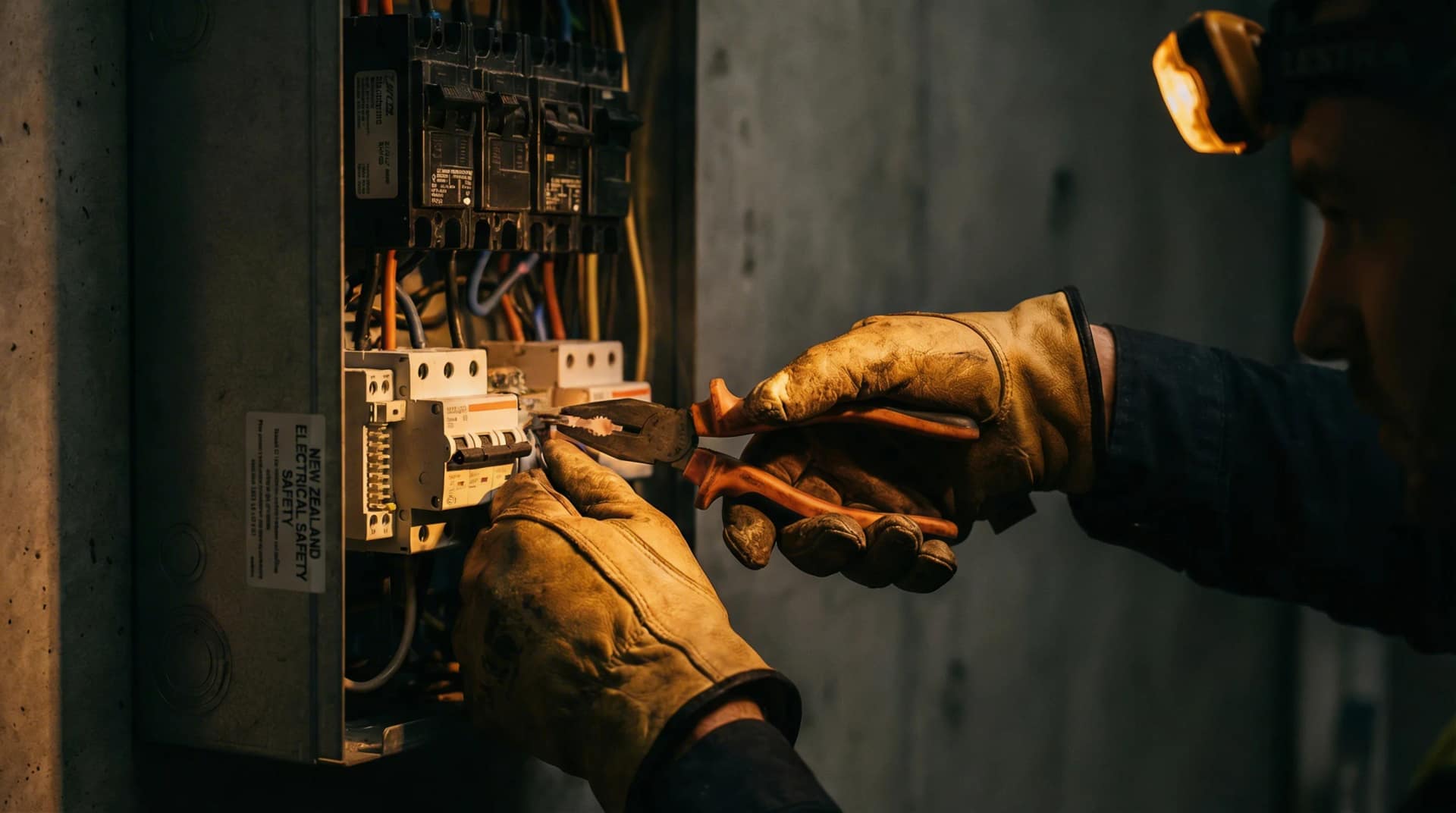
Most electrical installation work — known as “prescribed electrical work” — must be carried out by a registered electrician. This covers any work involving fixed wiring: inside walls, switchboards, circuits, hardwired outlets, and light fittings connected to your home’s electrical system.
When prescribed electrical work is completed, a Certificate of Compliance (COC) must be issued by the registered electrician. This confirms the work meets the AS/NZS 3000:2018 wiring standard and is a legal requirement — not optional.
What You Can Safely Do Yourself
Safe DIY tasks are generally limited to replacing or maintaining fittings that plug in or screw on, without touching any fixed wiring:
- Replace light bulbs, including LED upgrades in existing fittings
- Reset a tripped circuit breaker — once, to test if the fault has cleared
- Replace a fuse in a fuse board, if you understand the correct fuse type
- Install plug-in appliances, extension cords, and power boards
- Replace the plug on a standard appliance (standard NZ plug only)
- Install battery-operated or plug-in LED downlights (not hardwired)
- Set up plug-in or wireless smart home devices such as smart plugs or voice assistants
- Replace a lamp cord or appliance cord, if you are competent and follow manufacturer instructions
If you’re ever unsure, a quick call costs nothing — we’re always happy to give honest advice before you start. Here’s our contact details:
When You Must Call a Licensed Electrician
The following are examples of prescribed electrical work that must only be carried out by an EWRB-registered electrician. Attempting these yourself is illegal and puts your household at serious risk:
Switchboard Upgrades and Repairs
Outdated switchboards — particularly those with ceramic fuses — are a leading cause of house fires. If yours is old, overloaded, or showing signs of damage, have it assessed and replaced by a licensed electrician. See the signs your switchboard needs an upgrade for warning signs to watch for. Modern switchboards handle today’s electrical loads safely and include circuit protection devices that older boards lack.
Installing Hardwired Power Points or Light Fittings
Adding a new outlet, installing a hardwired light fitting, or relocating an existing point all involve your home’s fixed wiring. Even changing a light switch — if it involves touching the wiring — is prescribed work and requires a registered electrician.
Electrical Rewiring
Older homes, particularly character villas and bungalows, often contain outdated wiring that poses a genuine safety risk. Full or partial rewiring requires a qualified electrician who can assess the scope, carry out the work safely, and issue the required COC.
Heat Pump Installation
Heat pump installation involves both refrigerant handling (requiring a certified technician) and a hardwired electrical connection (requiring a registered electrician). These are two separate regulated activities — don’t rely on a supplier who only covers one.
EV Charging Station Installation
Installing an EV charger requires a dedicated circuit run from your switchboard. This is prescribed electrical work. Accredited installers can set up the correct circuit capacity and ensure compliance with your vehicle manufacturer’s requirements.
New Build Electrical Fitouts
All electrical work on a new build — from design through to final connections — must be completed by a registered electrician. A COC is required before the building can be signed off.
Outdoor and Underground Cabling
Installing outdoor lighting, garden power points, or underground cables requires knowledge of weatherproofing standards, burial depth regulations, and correct wiring practices. Mistakes in wet environments carry a real risk of electrocution. For planning ideas and costs, read our outdoor and landscape lighting guide.
Warning Signs That Need Urgent Attention
Some issues shouldn’t wait. Contact a licensed electrician immediately if you notice any of the following:
- Flickering or dimming lights across multiple rooms
- Circuit breakers that trip repeatedly under normal load
- Burning smell, scorch marks, or discolouration around switches or outlets
- Sparking from outlets or switches
- Buzzing or humming from your switchboard
- Hot power outlets or light switches
- Loss of power to part of your home without an obvious cause
- Electrical shocks from switches, outlets, or appliances
These symptoms can indicate serious underlying faults. Don’t ignore them.
Why Use a Master Electrician?
Choosing a Master Electricians New Zealand member means you’re covered by a workmanship guarantee and dealing with tradespeople held to the highest professional standards in the industry. Key things to look for:
- EWRB registration — legally required for all prescribed electrical work
- Master Electricians membership — workmanship guarantee and professional accountability
- Certificate of Compliance issued on every fixed wiring job — required by law
- Health and safety certification — such as Gold SiteWise, which covers job site safety standards
- Accredited installer status — relevant for heat pumps, EV chargers, and smart home systems