If you are planning a renovation, roof repair, painting project, or construction work on your property, there is a good chance you will need to work close to overhead power lines at some point. These lines carry live electricity and pose a serious risk to anyone who gets too close without proper protection in place.
Power line wraps are one of the most practical and cost-effective safety solutions available for this situation. At A1 Electrical, we install power line wraps across Dunedin, Mosgiel, and the wider Otago district for homeowners, builders, scaffolders, painters, and other tradespeople who need to work safely near live overhead lines.
Here is what you need to know.
What Are Power Line Wraps?
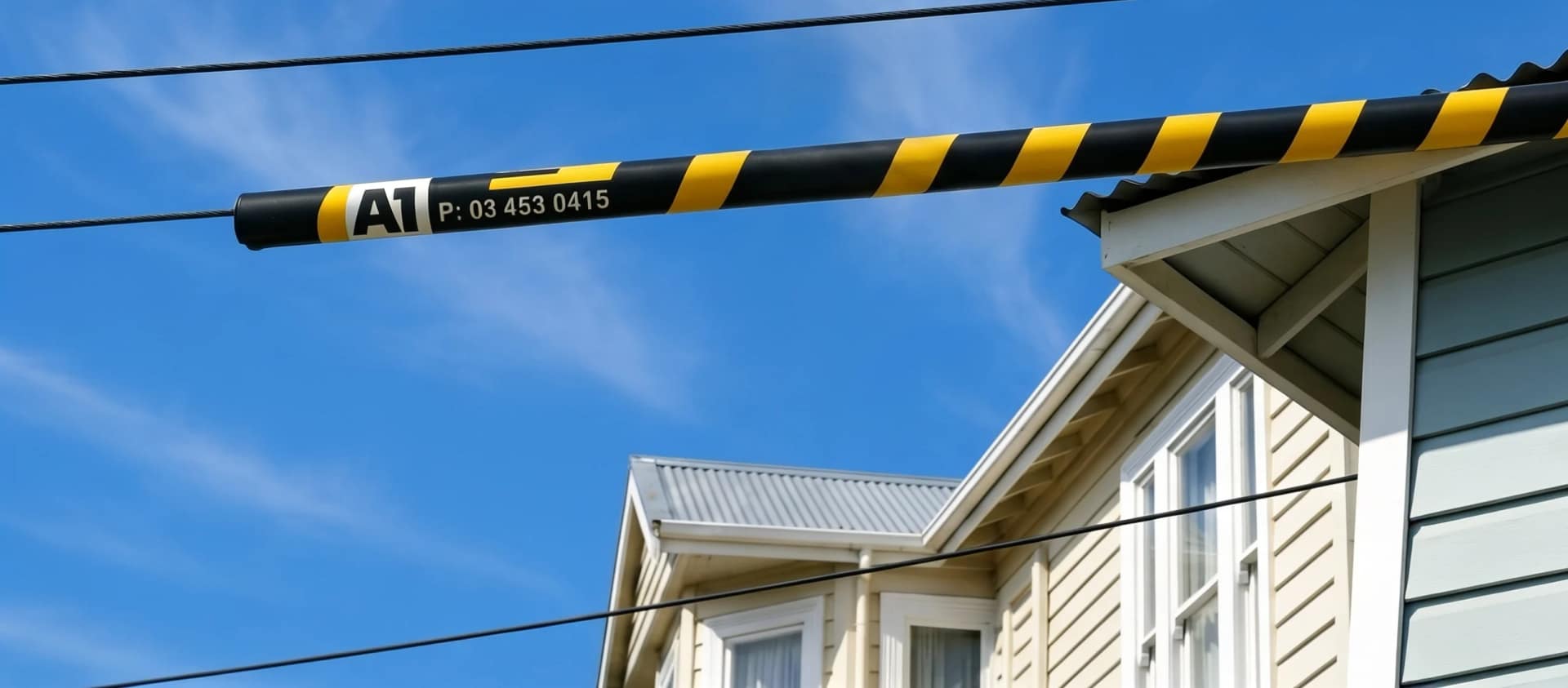
Power line wraps, sometimes also called line sleeves or tiger tails, are thick insulating covers that are fitted over live overhead power lines to reduce the risk of accidental contact during nearby work. They are typically made from high-grade insulating materials and are installed by licensed electricians, not simply clipped on by a homeowner.
The wraps create an insulated barrier around the live conductors, significantly reducing the risk of electric shock if a person, tool, or scaffold pole were to make accidental contact with the line. They also serve as a clear visual marker, making the presence of overhead lines obvious to everyone working on site.
When Do You Need Power Line Wraps?
Under New Zealand regulations, anyone working closer than four metres to a live overhead power line must have appropriate protective measures in place. This requirement is set out in NZECP 34:2001, New Zealand’s Electrical Code of Practice for electrical safe distances, and is enforced by WorkSafe New Zealand.
The types of work that most commonly trigger the need for power line wraps include:
- Scaffolding installations near the boundary of a property where lines cross or run nearby
- Roofing and spouting work on properties with overhead service lines
- Exterior painting, particularly on two-storey homes where ladders or elevating work platforms are used
- Tree trimming and arborist work near power lines running across a section
- Construction activity on sites where cranes or elevated work platforms operate in proximity to overhead lines
- Water blasting and exterior cleaning at height
If you are unsure whether your project falls within the four-metre threshold, the safest course of action is to contact A1 Electrical for an assessment before work begins.
What Are the Options When You Need to Work Near Power Lines?
When your project requires working within the safe distance zone of a live overhead line, you have two main options. The first is to arrange for the power line to be temporarily disconnected by contacting the network operator, which in Dunedin means working with Aurora Energy or Delta. This is possible for service lines running from the street to your property and can sometimes be done without charge, though it does require coordination and scheduling.
The second option is to have power line wraps installed by a licensed electrician. This approach avoids the need for a power disconnection, keeps your project moving, and is generally the faster and more practical solution. The wraps remain in place for the duration of the work and are removed by the electrician once the project is complete.
How the Installation Process Works at A1 Electrical
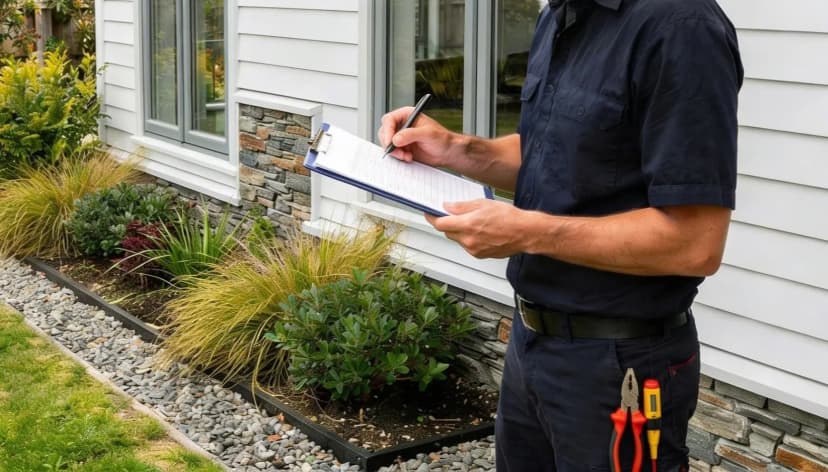
A1 Electrical’s process for power line wrap installations follows a clear and compliant sequence. We begin with a site assessment carried out by one of our Master Electricians, which includes a job safety analysis to identify the specific risks and confirm the scope of work required. We then coordinate with the relevant network operator, including Delta approval where required, to ensure all permits are in order before installation begins.
All wraps are installed to AS/NZS 3000 standards and in compliance with WorkSafe New Zealand requirements. Our double-insulated wraps are specifically designed to allow scaffolding to be placed closer to power lines while remaining within legal safe distance requirements, giving your trades team the access they need to complete the job.
We also provide a thorough briefing for all site workers on key safety elements before work commences, so that everyone on site understands the hazards and the precautions in place.
Why Not Just Keep Your Distance?
Maintaining informal distance is not a compliant approach. WorkSafe New Zealand takes electrical safety near overhead lines seriously and enforces compliance with NZECP 34:2001. A failure to implement appropriate controls can result in significant penalties for both the property owner and the tradespeople involved. More importantly, the consequences of electrical contact near live lines are severe and can be fatal.
Power line wraps provide documented, compliant protection and give all parties involved in a project confidence that the hazard has been properly managed.
Who Installs Power Line Wraps?
Power line wraps must be installed by a licensed electrician. This is not a DIY task, and the wraps cannot simply be purchased and fitted by a homeowner or builder without the appropriate qualifications and network operator coordination. A1 Electrical holds all required certifications and has extensive experience managing this process throughout the region.
We serve residential homeowners, scaffolding companies, building contractors, painters, and arborists throughout the region. Fixed-price quotes are available so you can plan the cost as part of your project budget from the outset.