Solar power is no longer something only early adopters and off-grid enthusiasts think about. More Kiwi households — including many in Dunedin and across the Otago region — are going solar every week, and the reasons are straightforward: lower power bills, rising electricity prices, and a cleaner way to power your home.
New Zealand has seen significant growth in grid-connected solar capacity, with adoption accelerating rapidly in recent years. If you have been curious about how it all works but found most explanations too technical, this guide is for you. We will walk through the basics in plain language, from how panels generate electricity to how your system connects to the national grid.
How Solar Panels Generate Electricity
Solar panels are made up of photovoltaic (PV) cells, usually manufactured from silicon. When sunlight hits these cells, it causes electrons to move. That movement creates an electric current, a process known as the photovoltaic effect.
The electricity produced at this stage is direct current (DC). Your home appliances run on alternating current (AC), so the DC electricity from your panels needs to be converted before it can power your lights, your fridge, or your heat pump.
The Role of the Inverter
The inverter is the component that converts DC electricity from your panels into AC electricity that your home can use. It is typically mounted on an exterior wall near your switchboard.
There Are a Few Types of Inverters Commonly Used in New Zealand Homes:
- String inverters connect to your entire array of panels and process their output as one combined feed. They are the most common and most cost-effective option.
- Microinverters attach to each individual panel. This means one shaded panel does not bring down the output of the whole system, which can be useful for roofs with partial shading.
- Hybrid inverters are compatible with battery storage systems, which allows you to store excess energy for use at night or during a power outage.
What a Typical NZ Home Solar System Looks Like
Most residential solar systems include the following components:
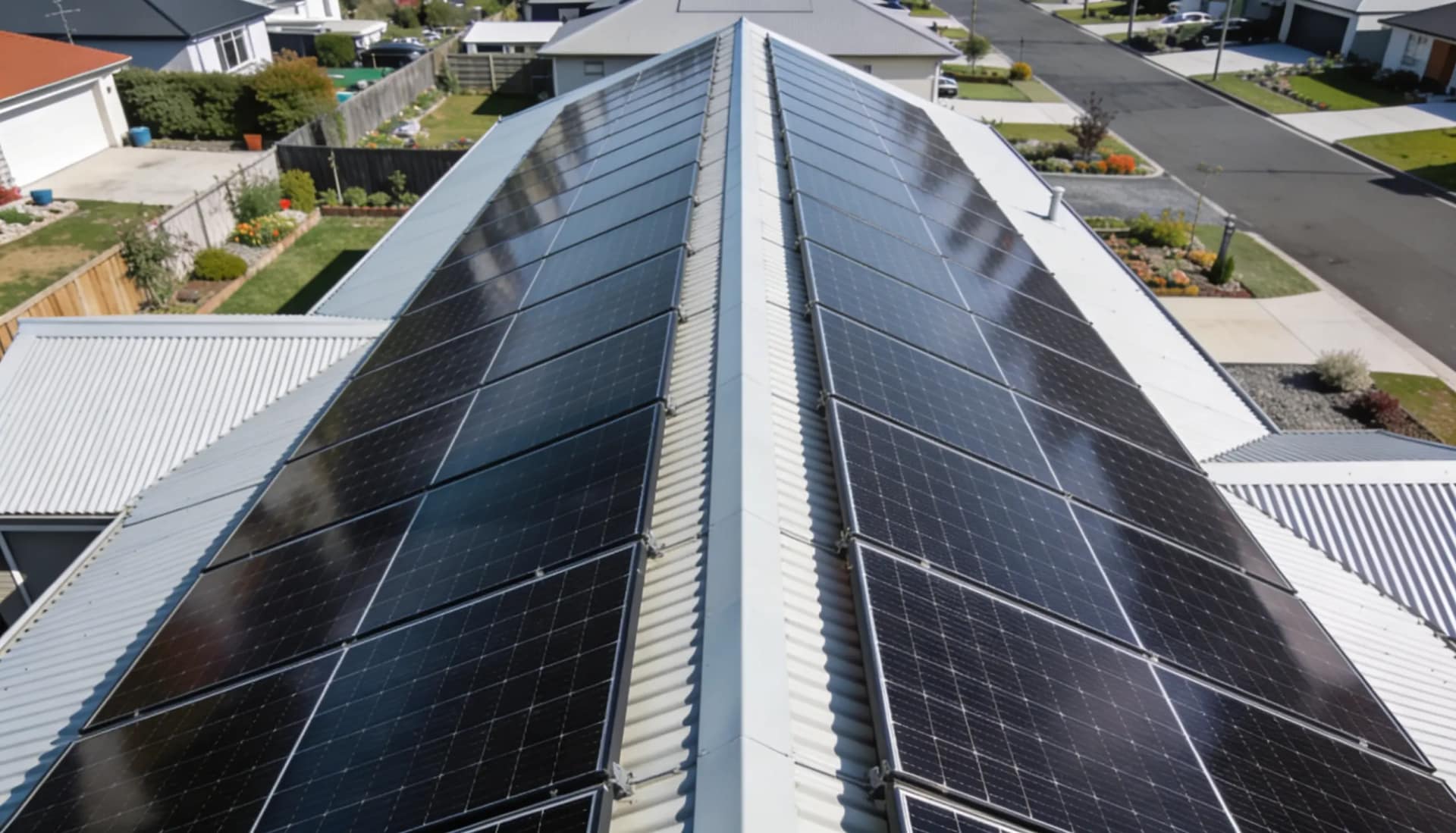
- Solar panels are mounted on the roof, usually north-facing for maximum sun exposure.
- An inverter to convert DC to AC electricity.
- A generation meter or import/export meter to measure how much electricity you produce and how much you feed back to the grid.
- Optionally, a battery storage system for storing surplus energy.
A typical 6 to 10 panel residential system currently costs approximately $12,000 to $20,000 installed, depending on system size, panel quality, and whether battery storage is included. Larger households or those planning to add an electric vehicle charger or heat pump often benefit from a bigger system of 6kW or more.
Grid-Connected Systems: How They Work Day to Day
The majority of New Zealand homes with solar are grid-connected, meaning they remain linked to the national electricity grid. Here is how a typical day works with a grid-tied system:
- During daylight hours, your panels generate electricity. Your home uses this power first.
- If your panels produce more electricity than your home needs at that moment, the surplus is exported to the grid. Your electricity retailer pays you a buy-back rate for this exported power.
- In the evening or on overcast days when your panels generate less, you draw power from the grid as normal.
Buy-back rates in New Zealand currently range from around 8 to 40 cents per kWh depending on your retailer and the time of day — rates are subject to change, so check with your retailer for current figures. The time-of-use export pricing introduced by the Electricity Authority means households with battery storage can earn more by releasing stored power during peak evening demand.
Does Solar Work in New Zealand’s Climate?
This is one of the most common questions, and the answer is yes, and often better than people expect. New Zealand receives between 1,400 and 2,600 sunshine hours per year depending on the region. Sunny areas like Nelson, Tauranga, Northland, and Canterbury are particularly well suited. But even in cloudier parts of the country — including Dunedin and Otago — panels continue to generate electricity on overcast days, just at reduced capacity.
The country’s temperate climate is actually an advantage. Solar panels perform better in cooler conditions than in extreme heat, so the country’s mild summers can produce strong and consistent output.
Is a Battery Worth Adding?
A battery stores the excess electricity your panels generate during the day so you can use it in the evening rather than exporting it to the grid. For households that use most of their power after dark, a battery can make a meaningful difference to self-sufficiency and monthly bill savings.
The upfront cost of adding a battery is significant, typically $5,000 or more for a modest system, so it does not make financial sense for every household. A good solar installer will model your energy use patterns and give you an honest comparison.
How Much Does Solar Cost in NZ in 2026?
Costs have come down considerably over the past decade. A typical 6 to 10 panel residential system in New Zealand currently costs around $12,000 to $20,000 installed, depending on system size, panel quality, and whether battery storage is included. For context, a comparable system cost around $40,000 in 2009 — illustrating just how significantly pricing has shifted.
Several major New Zealand banks now offer green home loans with very low or zero interest rates for qualifying solar installations, which makes the upfront cost far more manageable. Most households currently recover their investment within five to seven years.
What to Check Before You Commit
Before requesting quotes, a few practical checks will help you get a clearer picture of what solar can do for your home:
- Roof condition: Panels are designed to last 25 to 30 years. Your roof needs to be in good enough shape that it will not need replacing during that time, as removing and reinstalling panels adds cost.
- Roof orientation and shading: North-facing roofs with no shading from trees or neighbouring buildings during midday hours are ideal. Apps and solar calculators can give you a site-specific estimate.
- Your energy use patterns: Solar pays off best when you can use the electricity as it is generated. Households that run dishwashers, washing machines, and heat pumps during the day get a better return than those who use most power in the evening.
- Your existing meter: If you want to export power to the grid, your meter needs to be capable of recording both import and export. Your lines company can confirm this.
Residential rooftop solar installations no longer require building consent in New Zealand, which has simplified the process considerably.
Getting Your System Installed
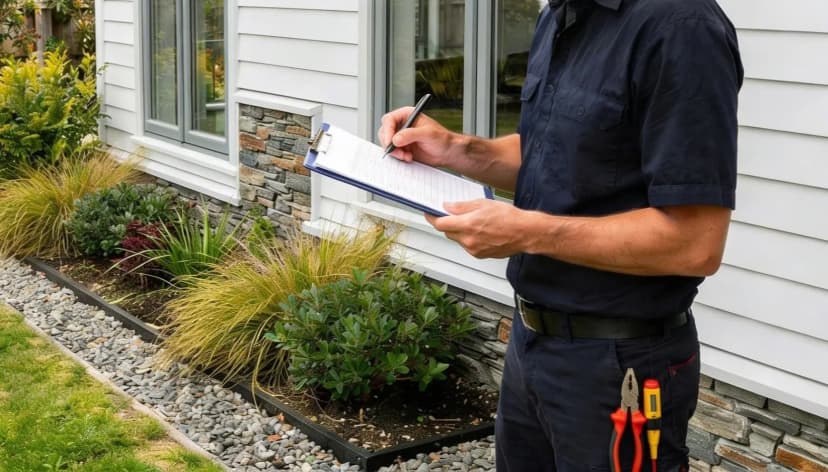
Under New Zealand law, any solar installation involving voltages above 50V AC or 120V DC must be carried out by a registered electrician. This covers virtually all grid-connected residential systems. Using a qualified installer protects you, ensures the system is compliant, and allows you to connect legally to the grid and claim buy-back rates from your retailer.
A1 Electrical is a registered electrician based in Dunedin and Mosgiel, with experience installing grid-connected solar systems for residential clients across the Otago region. The process from initial enquiry to a fully operational system typically takes four to six weeks. The installation itself is usually completed in a single day for a standard residential system.
Is Solar Worth It?
For most Kiwi households, solar is now a sound financial decision. With panel costs down, export rates improved, and power prices continuing to rise, the payback period has shortened significantly. Research also indicates that solar panels can increase property values by 3 to 4%, which adds another dimension to the return on investment.
For a deeper look at costs, payback, and financing, see are solar panels worth it in New Zealand. The best starting point is a personalised assessment from a reputable local installer who can design a system around your actual energy use, roof layout, and future plans.